
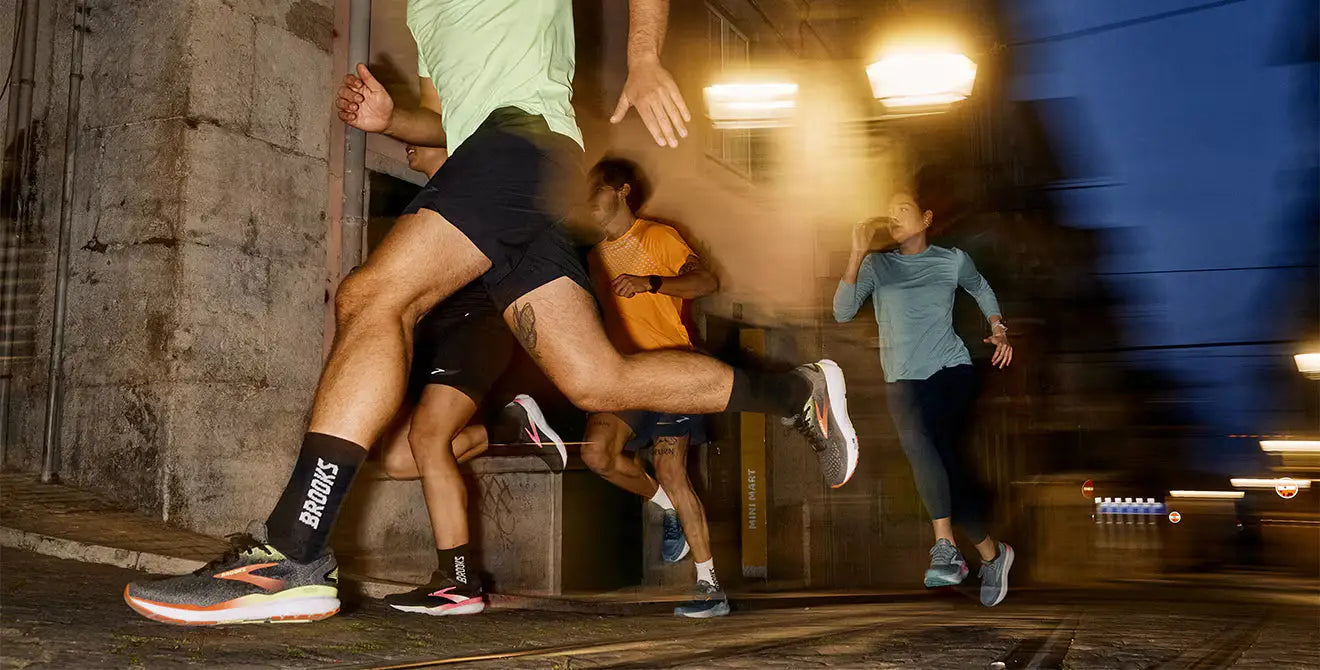

Discomfort in the lower legs can make everyday movement and exercise frustrating.
Whether it creeps in during a run or flares up after a long day on your feet, persistent pain around the shins can slow anyone down.
It’s a common problem for people starting a new fitness routine, increasing training intensity, or returning from time off.
The right exercises and stretches for shin splints can make a world of difference.
By building strength, improving flexibility, and easing tension, you can take meaningful steps toward recovery.
Key Takeaways
- Shin splints (medically known as medial tibial stress syndrome (MTSS)) refer to pain along the front or inner edge of the shin bone, often caused by repetitive stress from activities like running.
- It’s common in runners, dancers, and athletes, but anyone can get shin splints after a sudden increase in exercise.
- Shin splints are usually not serious and can be treated at home with proper care. Pain typically goes away in a few weeks with rest and the right interventions.
- A combination of stretching tight muscles and strengthening weak ones can relieve shin pain and prevent future shin splints.
- Five top exercises and stretches build support in your lower legs. These will loosen tight tissues that may contribute to shin splint pain. Regular stretching after exercise helps improve flexibility and decrease strain on the shins.
Chapters
- What are Shin Splints?
- Exercises and Stretches for Shin Splints
- 1. Wall Toe Raises (Dorsiflexion)
- 2. Calf Raises
- 3. Toe Curls with a Towel
- 4. Single Leg Balance
- 5. Single Leg Bridges
- 6. Gastrocnemius Calf Stretch
- 7. Soleus Calf Stretch (Bent-Knee Calf Stretch)
- 8. Achilles Tendon Stretch (Heel Drop)
- 9. Tibialis Anterior (Shin) Stretch
- 10. Seated Calf Stretch with Band
- Final Thoughts
What are Shin Splints?

Shin splints describe pain along the shin.
Typically, the pain is felt on the inner border of the tibia (shinbone) where muscles attach to bone.
Shin splints usually develop from overuse or repetitive impact.
Running, jumping, or brisk sports on hard surfaces can overwork the shin bone and surrounding muscles, leading to inflammation and pain.
Shin splints often result from repeated stress on the tibialis muscles (the muscles running alongside the shin) due to intensive or increased training.
Athletes like runners, dancers, and footballers commonly experience shin splints, especially if they suddenly ramp up their training intensity.
Causes of Shin Splints
Several factors can contribute to shin splints.
Muscle imbalances or weakness in the lower body may put extra strain on the shins.
Tight calf muscles or Achilles tendons can also reduce ankle flexibility and increase stress on the lower leg.
Improper footwear is another culprit.
Not using the right running shoes can alter your foot mechanics and burden the shins.
People with flat feet are at higher risk because the arch collapse adds tension to the shin area.
Shin Splint Symptoms
The hallmark symptom of shin splints is a dull, aching pain along the shin during or after exercise.
The area may be tender to touch, and sometimes mild swelling occurs.
The pain often starts off mild and gets worse with continued activity.
In the early stages it might only hurt after exercise, but if ignored it can progress to hurting even during rest.
The good news is that shin splints can usually be managed.
With proper care and exercises, most people recover fully and can return to their activities without shin pain.
Exercises and Stretches for Shin Splints
Strengthening the muscles in and around your shins will help support your lower legs and reduce strain on the shin bone.
The following five exercises and stretches target key areas to improve stability and shock absorption.
Perform these exercises after a gentle warm-up.
1. Wall Toe Raises (Dorsiflexion)

One of the best exercises to target the muscles at the front of your shin is the toe raise.
This move strengthens the anterior tibialis (the muscle alongside your shin) by practicing ankle dorsiflexion.
Strengthening this shin muscle is important because it helps your lower legs absorb impact more evenly when you run or jump.
How to do Wall Toe Raises
To do wall toe raises, stand with your back against a wall and your feet about 6 - 8 inches in front of you.
Keeping your heels on the floor, lift the front of your feet up towards your shins.
You should feel the muscles in your shins contracting.
Hold for a second or two, then slowly lower your toes back down.
Repeat for the desired number of repetitions.
As you get stronger, you can hold the top position longer (5 - 10 seconds).
2. Calf Raises

Strong calf muscles play a vital role in preventing shin splints.
Your calves help support the ankle and absorb impact when you run, sparing your shin bone from excessive stress.
Calf raises are a simple exercise you can do anywhere to build strength in these muscles.
How to do Calf Raises
Start by standing on a flat surface with your feet hip-width apart.
Hold onto a wall or chair for balance if needed.
Slowly rise up onto your toes, lifting your heels off the ground as high as comfortable.
At the top, you’ll be on the balls of your feet.
You should feel your calf muscles contracting.
Hold the raised position for a second, then lower your heels back down slowly.
Try not to plop down, as slow lowering is great for building strength and flexibility in the calf and Achilles.
Repeat this motion for 10 - 15 reps.
As you become stronger, challenge yourself by doing calf raises on the edge of a step, or try single-leg calf raises for added difficulty.
3. Toe Curls with a Towel

Shin splints aren’t just about the shins - your feet play a role too.
If you have flat feet or weak foot arches, it can contribute to shin pain because the impact of each step isn’t well supported by your foot’s structure.
Toe curls are an excellent exercise to strengthen the intrinsic muscles of your feet and the arches, which in turn reduces stress on your shins.
How to do Toe Curls with a Towel
To perform toe curls, sit in a chair and place a small towel flat on the floor in front of you.
With one foot, place your toes on the end of the towel.
Scrunch your toes to grip the towel and pull it toward you, bunching it up under your foot.
This curling motion works the muscles under your arch and in your toes.
Release and repeat for 10 - 15 repetitions, then switch to the other foot.
If it’s too easy, you can add a light weight to create resistance as you curl the towel.
4. Single Leg Balance

A simple but powerful exercise for shin splints is practicing single leg balance.
Often, poor balance or weak stabiliser muscles in the ankles and feet can lead to uneven loading on the shins.
By training your balance, you engage the small muscles in your feet, ankles, and lower legs that keep you steady.
Improved stability in the lower leg means your shin bone is better supported during movement.
How to do Single Leg Balancing
To do this exercise, stand near a wall or chair.
Shift your weight onto one leg and lift the opposite foot off the ground, bending that knee slightly.
Try to maintain your balance on the standing leg for 30 seconds.
Keep a slight bend in the knee of the leg you’re standing on and focus on not allowing your ankle to roll in or out excessively.
You’ll feel your calf, ankle, and foot muscles working to keep you upright.
If 30 seconds is too long at first, start with 10 - 15 seconds and build up.
Switch to the other leg and balance for the same amount of time.
Repeat this for 2 - 3 sets on each leg.
5. Single Leg Bridges

Shin splints can sometimes be influenced by weaknesses higher up the leg.
Strengthening your hips and glutes can improve your overall leg alignment and reduce undue stress on your shins.
One highly recommended exercise is the single leg bridge, which targets the gluteal muscles, hamstrings, and core.
How to do Single Leg Bridges
To perform a single-leg bridge, lie on your back on an exercise mat.
Bend your knees and place your feet flat on the floor, hip-width apart.
Now lift your hips by squeezing your glutes, so your body forms a straight line from shoulders to knees.
From here, extend one leg straight out so that your thighs remain parallel.
You are now supporting your body weight with the opposite leg and your shoulders.
Hold your hips up, keeping them level.
You should feel the effort in the back of your thigh and your buttock of the supporting leg.
Hold for about 5 - 10 seconds, then lower the extended leg and hips back down.
Repeat on the other side.
Do 5 - 10 repetitions per leg.
6. Gastrocnemius Calf Stretch

A wall calf stretch lengthens the gastrocnemius muscle in the upper calf, helping relieve tension that can contribute to shin splints.
The gastrocnemius is the large muscle of your upper calf, and tightness here is often linked to shin splint pain.
Stretching this muscle will improve your ankle flexibility and take pressure off your shins.
A classic way to stretch the gastrocnemius is the standing wall calf stretch.
How to do a Gastrocnemius Calf Stretch
Stand facing a wall an arm’s length away.
Place your hands on the wall at shoulder height.
Step one foot back about 2 feet behind the other.
Keep the back leg straight and press that heel firmly into the ground with toes pointing forward.
Your front leg is bent slightly.
Now lean your body forward toward the wall, bending the front knee until you feel a stretch in the calf of your back leg.
Be sure to keep the back knee straight and your heel down.
You’ll feel a strong pull in the upper calf of the rear leg.
Hold this stretch for about 30 seconds, then switch legs.
7. Soleus Calf Stretch (Bent-Knee Calf Stretch)

Just below the gastrocnemius is the soleus muscle, which is the lower calf muscle that attaches to the Achilles tendon.
The soleus is worked heavily during running, and tightness here can limit your ankle movement and affect your stride.
To stretch the soleus, the approach is similar to the classic calf stretch but with a key difference: you bend the back knee.
How to do a Soleus Calf Stretch
Assume the same position as the wall stretch above, with one foot behind the other, but this time bend your back knee while also bending your front knee.
Keep both heels down.
You should feel the stretch a bit lower in your calf, closer to the heel.
By bending the back knee, you take the gastrocnemius out of the equation and isolate the soleus muscle.
Lean into the wall until you feel a moderate stretch in that lower calf of the back leg.
Hold for 20 - 30 seconds, then switch sides.
If it’s too difficult to keep your heel down when bending the back knee, bring your feet a little closer together to reduce the strain..
8. Achilles Tendon Stretch (Heel Drop)

The Achilles tendon connects your calf muscles to your heel bone.
A tight Achilles tendon often accompanies tight calves and can contribute to poor ankle flexibility, a risk factor for shin splints.
Stretching the Achilles will further loosen your calves and improve overall flexibility in the lower leg.
One of the best ways is the heel drop stretch on a step.
How to do a Achilles Tendon Stretch
Stand on a step or curb with the balls of your feet on the edge and your heels hanging off.
Hold a railing or wall for balance.
Now slowly lower one heel down, dropping it below the level of the step.
You’ll feel a strong stretch through your calf and into your Achilles tendon.
Keep the leg you are stretching straight or slightly bent.
Hold the lowered heel position for 20 - 30 seconds.
You can intensify the stretch by gently bouncing or moving the heel up and down in small motions, but do this carefully.
9. Tibialis Anterior (Shin) Stretch

While we often focus on the back of the leg, the front can get tight as well.
The tibialis anterior muscle (along the shin) can become overworked and tight in shin splints, especially in anterior shin splints.
A gentle shin stretch can help relieve that tension.
A common way to stretch this muscle is the kneeling shin stretch.
How to do a Tibialis Anterior Stretch
Kneel on the floor with your knees together and the tops of your feet flat on the ground (toes pointed behind you).
Your buttocks will be resting on your heels.
Now, gently lean back, using your hands on the floor behind you for support, and lift your knees off the ground a little.
You should feel a stretch along the front of your lower legs.
That’s the tibialis anterior and the muscles around it lengthening.
Be cautious and only lift the knees as far as comfortable.
You don’t want sharp pain in the ankles or feet.
Hold for about 20 seconds, then return to the starting position.
Repeat a few times.
If kneeling like this is hard on your ankles, you can modify the stretch by doing one leg at a time.
Sit in a chair, and tuck one foot back under the chair with toes pointed (top of foot on the floor), then gently press the foot top down to stretch the shin.
10. Seated Calf Stretch with Band

The seated calf stretch is another great way to improve flexibility in the lower leg, and it’s especially useful if you need a gentler stretch or an alternative to standing stretches.
You’ll also stretch your Achilles and hamstring a bit with this one.
For this stretch, you’ll use a towel, strap, or resistance band to assist.
How to do a Seated Calf Stretch with Band
Sit on the floor with your legs extended straight in front of you.
Loop a towel or resistance band around the ball of one foot.
Keep that leg straight.
Gently pull the towel/band toward you, which will flex your foot and stretch the calf.
You should feel a stretch in your calf and behind your ankle.
Hold for 15 - 30 seconds, then switch legs.
Make sure you’re pulling evenly on both sides of the band or towel so that your foot is pulled straight back and not twisted.
Use this stretch to cool down after running or even on rest days to gently maintain your flexibility.
Final Thoughts
You should now have more of an understanding of exercises and stretches for shin splints.
Shin splints can be frustrating for active individuals, but with the right care and prevention strategies, they don’t have to keep you on the sidelines.
A routine that includes targeted stretches for the calves, Achilles tendon, and shins, can effectively relieve shin splint pain and fortify your legs against future injury.
Remember to ease into any new exercise program gradually and pay attention to your body’s signals.
Many runners and athletes find that shin splints improve significantly when they maintain good flexibility, wear proper footwear, and incorporate strength training for the feet and legs.
With a bit of patience and the right approach, shin splints can be overcome, allowing you to stay active and achieve your fitness goals without discomfort.
Happy healing and stay strong!
For more information on exercises and stretches for shin splints, get in contact with us here at The Running Outlet.